


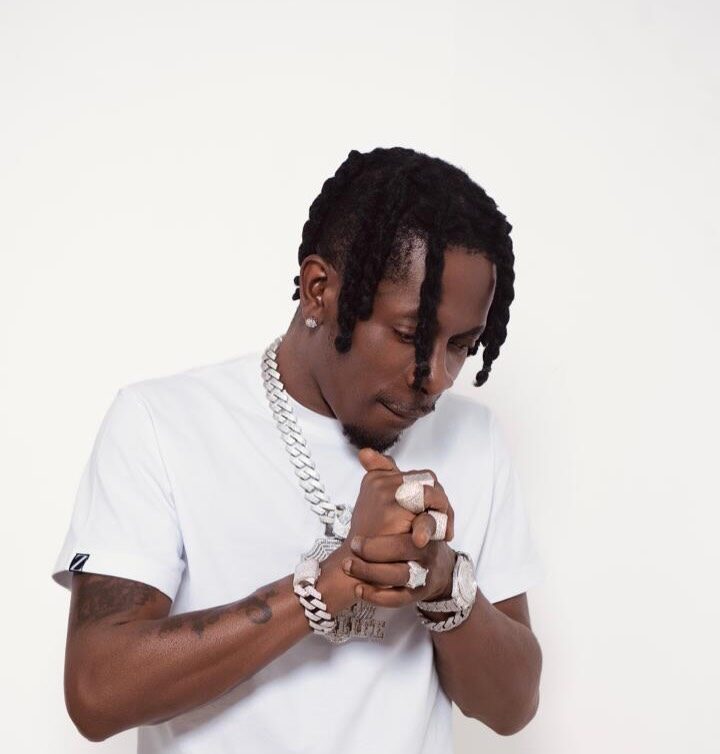
Ghanaian dancehall artiste Charles Nii Armah Mensah Jr., popularly known as Shatta Wale, has appealed to President John Dramani Mahama to support a balanced approach to tackling defamation, harassment and abuse on social media.
In an open letter addressed to the President, Shatta Wale said efforts to deal with harmful online conduct must not come at the expense of freedom of expression, journalism, satire or legitimate criticism.
The musician was responding to President Mahama’s recent comments at a Town Hall Meeting with the Ghanaian community in New York, where the President raised concerns about misinformation and insults on TikTok and other digital platforms.
– Advertisement –
According to Shatta Wale, the problem of public ridicule and unverified allegations did not start with social media. He argued that it existed within sections of entertainment commentary before spreading to comment sections and eventually becoming more widespread through platforms that allow users to broadcast information instantly.
“As a creative who has spent many years as the subject of unverified allegations and public ridicule, I believe this culture did not begin with social media,” he wrote.
Shatta Wale noted that the issue now affects a wide range of people, including traditional leaders, business owners, journalists, public officials and ordinary citizens.
While acknowledging the constitutional protection of freedom of speech and freedom of the media, he argued that those rights should not be interpreted as permission to threaten, harass or knowingly circulate harmful falsehoods.
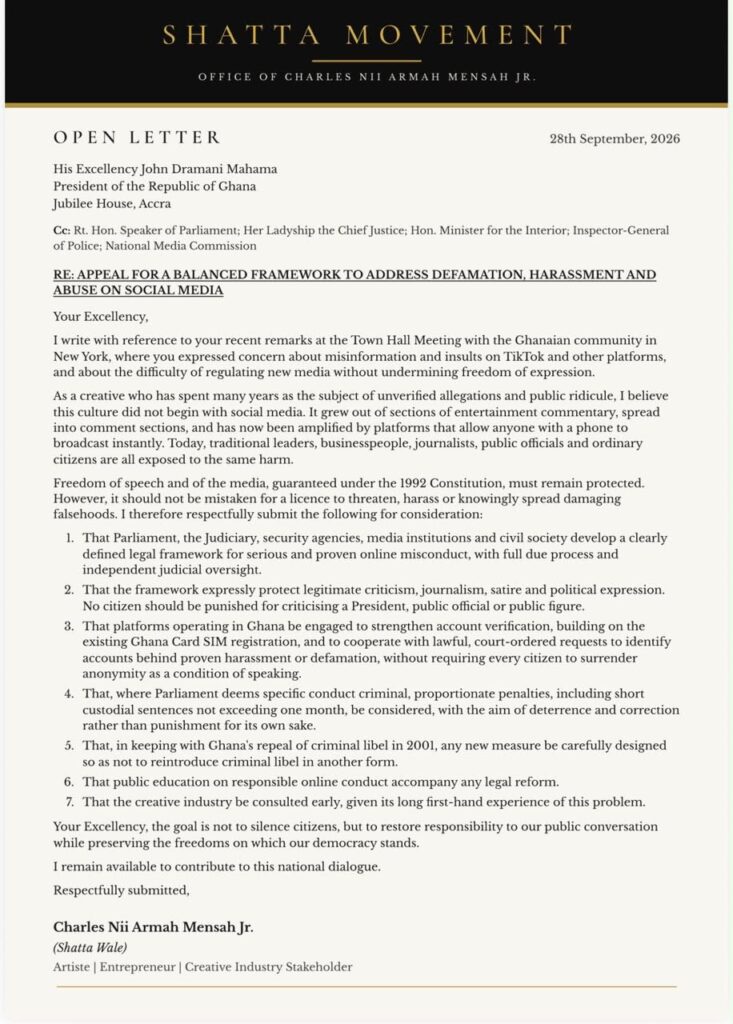
He therefore called for Parliament, the Judiciary, security agencies, media institutions and civil society organisations to work together on what he described as a clearly defined legal framework for serious and proven online misconduct.
He stressed that any such framework must include due process and independent judicial oversight.
At the same time, Shatta Wale urged authorities to ensure that legitimate criticism, journalism, satire and political expression remain protected.
READ ALSO: Ohemaa Woyeje Raises Safety Concerns After Dinero’s Gruesome Murder
“No citizen should be punished for criticising a President, public official or public figure,” he stated.
The musician also proposed greater engagement with social media platforms operating in Ghana, suggesting that account verification could be strengthened using the existing Ghana Card and SIM registration system.
He further called for platforms to cooperate with lawful, court-ordered requests to identify accounts linked to proven cases of harassment or defamation, while cautioning against making anonymity a requirement for every citizen who wants to express an opinion online.
On penalties, Shatta Wale suggested that Parliament could consider proportionate sanctions for conduct it determines should be criminalised. He proposed that any custodial sentence should not exceed one month, with the emphasis placed on deterrence and correction rather than punishment for its own sake.
He also warned against creating laws that could effectively bring back criminal libel, which Ghana repealed in 2001.
“Any new measure be carefully designed so as not to reintroduce criminal libel in another form,” he said.
Beyond legislation, Shatta Wale called for public education on responsible online behaviour and urged the government to involve the creative industry from the early stages of any discussions on reform.
He said people working in the creative sector have had years of first-hand experience with public commentary, allegations and online abuse, making their input important to the national conversation.
Shatta Wale addressed the letter to President Mahama and copied the Speaker of Parliament, the Chief Justice, the Minister for the Interior, the Inspector-General of Police and the National Media Commission.
He maintained that his proposal was not intended to silence Ghanaians but to encourage greater responsibility in public discourse while protecting the freedoms guaranteed under Ghana’s democratic system.
“The goal is not to silence citizens, but to restore responsibility to our public conversation while preserving the freedoms on which our democracy stands,” he wrote.
The artiste concluded by expressing his willingness to contribute to further discussions on how Ghana can address harmful online conduct without undermining constitutional freedoms.
Read the letter below.
– Advertisement –
