


A video posted by a Tamil film star showing him cuddling an endangered gibbon has triggered an investigation by Indian wildlife officials over how he came into contact with the animal.
Vikram, an award-winning actor from the southern state of Tamil Nadu, was seen hugging and playing with a lar gibbon in a now-deleted video posted on Instagram on Monday.
The state’s forest department has since begun investigating how the gibbon came to be at a private home and whether rules governing its possession and transfer were followed.
They have not concluded that the animal was trafficked, or that Vikram owned it or was involved in bringing it into India.
Vikram has not commented on the controversy yet. His public relations officer, Yuvaraj, told BBC Tamil that the media would be informed if the actor issued a statement.
Lar gibbons are small apes native to south-east Asia whose international trade is tightly controlled.
Officials said the animal was being kept at the home of a relative of Vikram in Chennai, the capital of Tamil Nadu state.
The state’s Chief Wildlife Warden Rakesh Kumar Dogra told BBC Tamil that individuals could keep a lar gibbon if they had the permits and documentation required by law.
“An investigation is under way into where the lar gibbon came from. Only then can we say whether it was brought illegally,” he said.
The case has made national headlines. Vikram, whose real name is Kennedy John Victor, is one of the biggest names in Tamil cinema, India’s popular Tamil-language film industry. His career spans more than three decades and he is known for taking on unconventional and physically demanding roles.
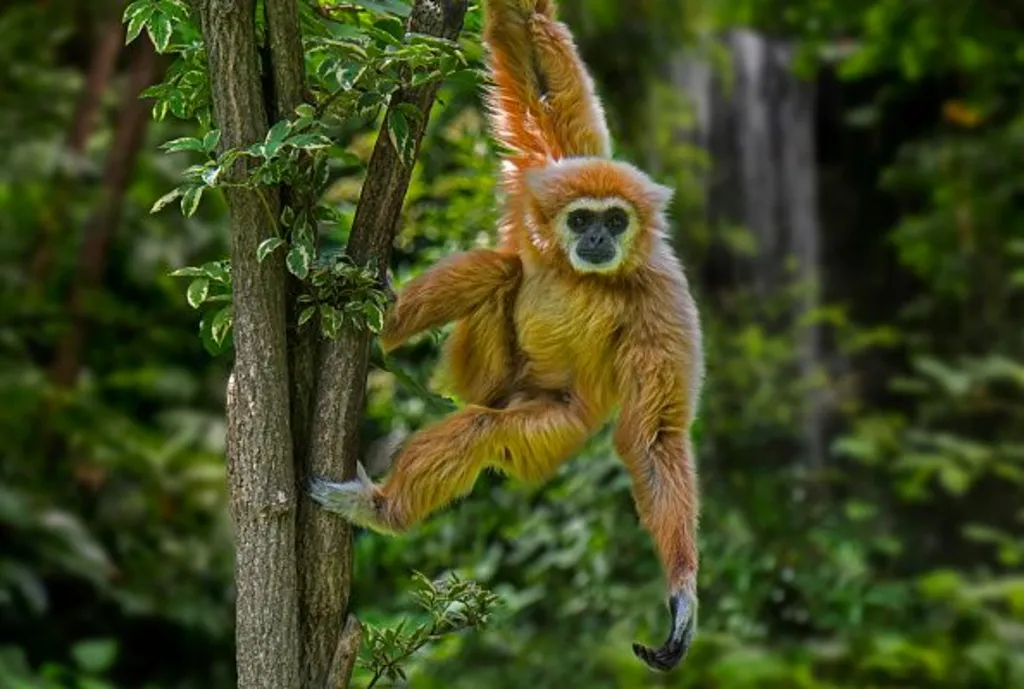
Lar gibbons are small apes covered in blonde or dark brown fur, with a distinctive ring of white fur around their faces.
They live in tropical forests in small family groups and are found across parts of south-east Asia, including Thailand, Myanmar and Malaysia.
The species is listed as endangered, with its numbers threatened by habitat loss, hunting and the illegal pet trade.
They are also protected under CITES, an international agreement that tightly restricts trade in endangered species.
India is among the countries that has incorporated protections for CITES-listed species into its wildlife laws. People who keep such animals must register them with wildlife authorities and follow rules governing their possession and transfer.
“To import exotic animals, it is necessary to submit a DGFT [Directorate General of Foreign Trade] permit and a no-objection certificate, and then a wildlife conservator’s certificate,” Dogra said.
The controversy began on Monday when Vikram posted the video of himself playing with the lar gibbon on Instagram.
The footage quickly spread online, with some media reports describing the animal as the actor’s new pet. It was deleted from his account within hours.
The short video has since led wildlife officials down a trail stretching more than 2,000km (1,240 miles) away to the north-eastern state of Manipur.
A senior Tamil Nadu forest official, speaking to BBC Tamil on condition of anonymity, said they had found the animal was among eight lar gibbons – four males and four females – that a Manipur-based man had declared on the government’s PARIVESH portal in 2020.
PARIVESH is the official platform used to register exotic animals and obtain environment, forest and wildlife-related permissions in India. According to records on the portal, Malaysia was listed as the animals’ country of origin.

Records cited by the official show that on 5 June this year, one male and two female lar gibbons were transferred from Manipur to a person in Perundurai in Tamil Nadu’s Erode district. The stated purpose was adoption.
But investigators have not yet found documentation showing that permission from Tamil Nadu’s Chief Wildlife Warden had been obtained for the animals to be brought into the state, the official said.
Two months later, on 5 August, one male and one female gibbon were transferred from Perundurai to Vikram’s relative in Chennai, according to the Forest Department’s investigation.
Investigators are now trying to establish the precise origins of the gibbons and whether the necessary documentation was in place at each stage of their journey.
Wildlife activists have also raised questions about how the animals originally entered India. Manipur borders Myanmar, and India’s north-east has been flagged as a route for the illegal trade in exotic wildlife, although authorities have not concluded that the gibbons in this case were trafficked.
The Tamil Nadu Forest Department says it is examining their documentation, including whether rules governing the international movement and possession of CITES-listed animals were followed.
India’s Wildlife Crime Control Bureau (WCCB), a federal agency that investigates organised wildlife crime, has also become involved in the case.
Thenmozhi, the bureau’s Southern Zone Deputy Director, told BBC Tamil that it had written to wildlife officials in Chennai asking them to verify documents and take appropriate action.
“The lar gibbon is classified as a protected species under this agreement. They should only be handled as protected animals,” Thenmozhi said, referring to CITES.
The WCCB said further action would depend on what officials found during their investigation.
The case comes amid wider concern about illegal trade of exotic animals into India. In recent years, customs officials have repeatedly intercepted passengers arriving from south-east Asia with live reptiles, birds and primates concealed in their luggage.
In July 2025, more than 350 exotic animals from Bangkok were seized at Mumbai and Pune airports over a two-month period. Gibbons have also turned up in seizures: in November, customs officials in Bengaluru found one among exotic animals being brought in by passengers arriving from Bangkok.
Chennai itself has seen several such cases. In February this year, customs officials seized 31 exotic animals from a passenger arriving from Bangkok, including tortoises, iguanas and snakes.
DISCLAIMER: The Views, Comments, Opinions, Contributions and Statements made by Readers and Contributors on this platform do not necessarily represent the views or policy of Multimedia Group Limited.
DISCLAIMER: The Views, Comments, Opinions, Contributions and Statements made by Readers and Contributors on this platform do not necessarily represent the views or policy of Multimedia Group Limited.
Source link
