


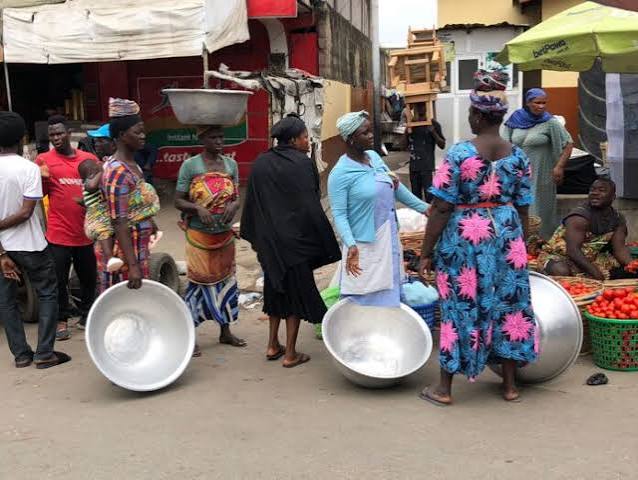
Vice President Professor Naana Jane Opoku-Agyemang has called for a broader and more sustainable approach to addressing the challenges facing head porters, popularly known as Kayayei.
She said interventions must go beyond skills training to include sustainable livelihoods, protection from exploitation and improved welfare for children living within Kayayei communities.
Professor Opoku-Agyemang made the call on Monday, August 10, 2026, when she met representatives of the Kayayei Association at the Jubilee House.
The meeting focused on the challenges confronting head porters and measures to improve their livelihoods, including access to skills training, sustainable business opportunities and social protection.
The Vice President said the Kayayei phenomenon must be understood within the broader context of migration, inequality and development rather than treated as an isolated social issue.
She noted that several economic and social factors compel women and girls to leave their communities in search of opportunities in urban centres.
According to her, while skills training remains important, such interventions must reflect the aspirations of the women and be supported with the tools, capital and market opportunities required to turn those skills into sustainable sources of income.
She stressed that training without the necessary resources and access to markets may not be sufficient to break the cycle of economic vulnerability confronting many Kayayei.
Professor Opoku-Agyemang also raised concerns about children living within Kayayei communities.
She said their welfare and protection must form an integral part of government and stakeholder interventions aimed at addressing the phenomenon.
She further called for measures to protect head porters from exploitation and other vulnerabilities associated with their working and living conditions.
The Vice President commended the Ministry of Gender, Children and Social Protection and the Kayayei Association for their continued engagement on the issue.
She assured the group that government would work with relevant institutions to develop a broader response that addresses both the immediate needs and long-term livelihoods of head porters.
The engagement forms part of efforts to find more sustainable solutions to the social and economic challenges that drive women and girls into head-porting work in urban centres.
DISCLAIMER: The Views, Comments, Opinions, Contributions and Statements made by Readers and Contributors on this platform do not necessarily represent the views or policy of Multimedia Group Limited.
DISCLAIMER: The Views, Comments, Opinions, Contributions and Statements made by Readers and Contributors on this platform do not necessarily represent the views or policy of Multimedia Group Limited.
Source link
