


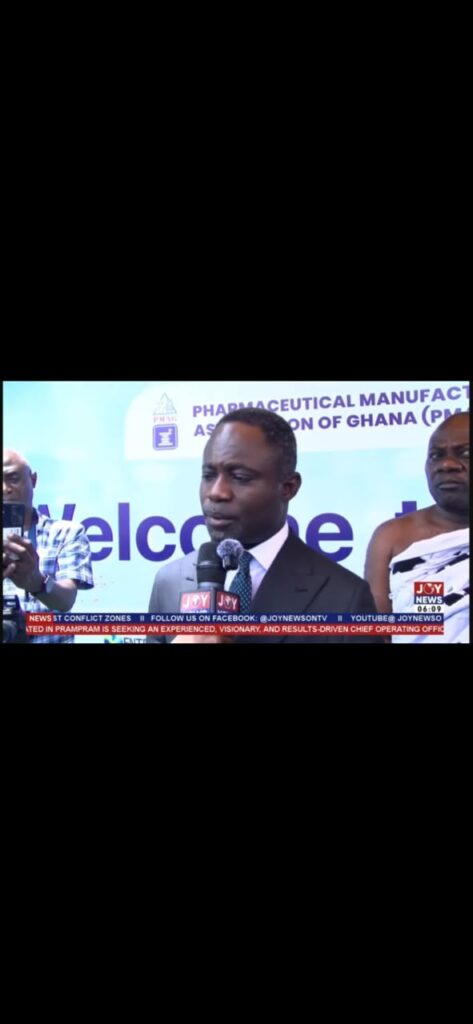
Africa spends more than US$14 billion each year importing pharmaceutical products, a level of dependence that is unsustainable and must be reversed through greater investment in local manufacturing, Minister for Health Kwabena Mintah Akandoh has said.
Speaking at the 27th anniversary celebration of the Pharmaceutical Manufacturers Association of Ghana (PMAG) in Accra, Mr Akandoh said the continent’s heavy reliance on imported medicines continues to undermine local production, limit competitiveness and affect access to affordable healthcare.
“Africa imports not less than 14 billion dollars’ worth of pharmaceutical products every year. It is long overdue for us to shift from this dependency paradigm and invest in strengthening local pharmaceutical manufacturing,” he said.
According to the Minister, expanding domestic pharmaceutical production will strengthen Ghana’s health security, reduce dependence on imports, create jobs and contribute significantly to economic growth.
His comments come as Ghana continues to spend hundreds of millions of dollars annually on imported pharmaceutical products. According to international trade data, Ghana imported pharmaceutical products worth approximately US$318.5 million in 2024, down slightly from about US$296.6 million in 2025.
Also addressing the event, Presidential Advisor on the 24-Hour Economy, Goosie Tanoh, said the government’s flagship 24-Hour Economy policy would place greater emphasis on supporting the manufacturing sector, including pharmaceutical companies, to increase local production and build a more resilient industry.
The President of the Pharmaceutical Manufacturers Association of Ghana (PMAG), Dr Samuel Amo Tobbin, said local manufacturers currently supply only about 30 per cent of Ghana’s pharmaceutical needs.
He appealed to the government to provide stronger financial, regulatory and policy support to enable local manufacturers to expand production capacity and improve the availability of medicines produced in Ghana.
The 27th PMAG anniversary brought together government officials, pharmaceutical manufacturers and other industry stakeholders to discuss strategies for strengthening local pharmaceutical production and positioning Ghana as a competitive manufacturing hub within the sub-region.
DISCLAIMER: The Views, Comments, Opinions, Contributions and Statements made by Readers and Contributors on this platform do not necessarily represent the views or policy of Multimedia Group Limited.
DISCLAIMER: The Views, Comments, Opinions, Contributions and Statements made by Readers and Contributors on this platform do not necessarily represent the views or policy of Multimedia Group Limited.
Source link
