


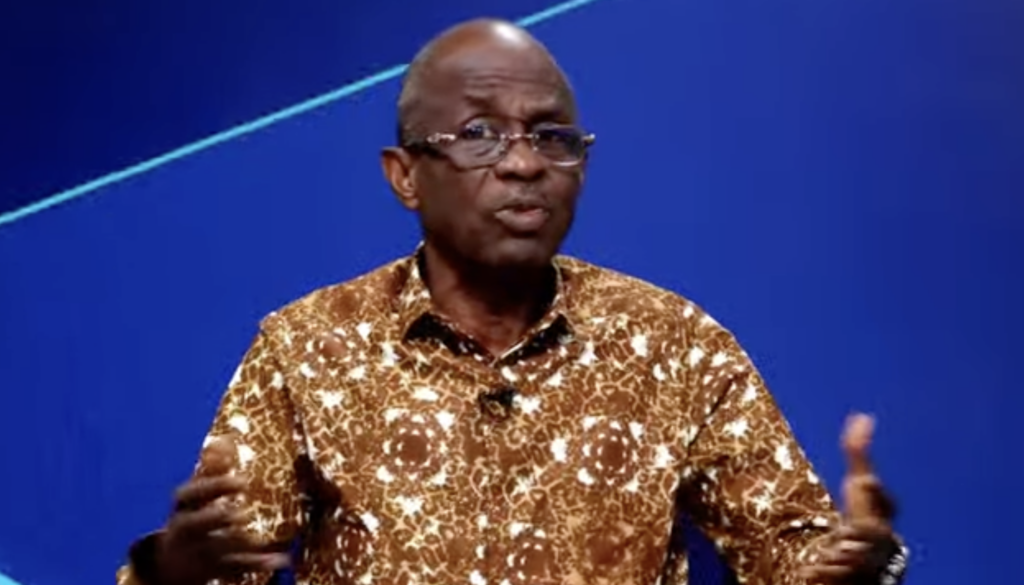
NDC National Chairman Johnson Asiedu Nketiah has rejected criticism of the government’s spending levels, insisting that funds will be released only when work has been properly completed.
His comments follow concerns from critics that the government’s relatively low expenditure compared to its budget target is responsible for recent economic stability.
The criticism has focused on the fact that while about GH¢30 billion was budgeted for the year, only about GH¢6 billion had reportedly been spent by the middle of the year.
But speaking on JoyNews’ PM Express on Tuesday, Asiedu Nketiah explained that government spending follows processes, especially procurement, before payments can be made.
“We haven’t been to the end of the year. Mostly procurement takes some time, but without procurement you can’t spend,” he said.
He explained that the early stages of projects often involve procurement procedures, meaning actual payments may come later after contracts have been awarded and work has started.
“And then, once procurement is done, then performance will begin, certificates will be prepared, and then payment can follow,” he added.
The NDC chairman argued that the amount spent so far should not be considered insignificant, saying payments will increase as projects progress and certification is completed.
“So I believe that even 6 billion is not too small. As work gets done and we are getting to the end of the year, you have certificates that you can honour.”
He said the criticism would be different if government lacked funds to execute projects, but argued that spending must be guided by proper procedures and value for money.
“If it is about the money not being available, it’s another ball game altogether. But if it is about the money sitting there, but spending it is the issue with our critics, then you know that we can spend 100 billion in one month, can’t we?”
However, he stressed that government spending must be tied to results and should not involve releasing funds without accountability.
“But you need to spend it appropriately; there must be value for money. You must pay for work done and all that.”
Asiedu Nketiah said the government would not adopt practices where contractors receive money upfront without delivering on projects.
“We are not giving money for advance payment, mobilization payments, where people take the money and run away with. That’s not what we are doing.”
He maintained that the government’s approach is to ensure that contractors and service providers complete their obligations before receiving payment.
“Perform, and we pay you, and so that shouldn’t be a problem.”
DISCLAIMER: The Views, Comments, Opinions, Contributions and Statements made by Readers and Contributors on this platform do not necessarily represent the views or policy of Multimedia Group Limited.
DISCLAIMER: The Views, Comments, Opinions, Contributions and Statements made by Readers and Contributors on this platform do not necessarily represent the views or policy of Multimedia Group Limited.
Source link
