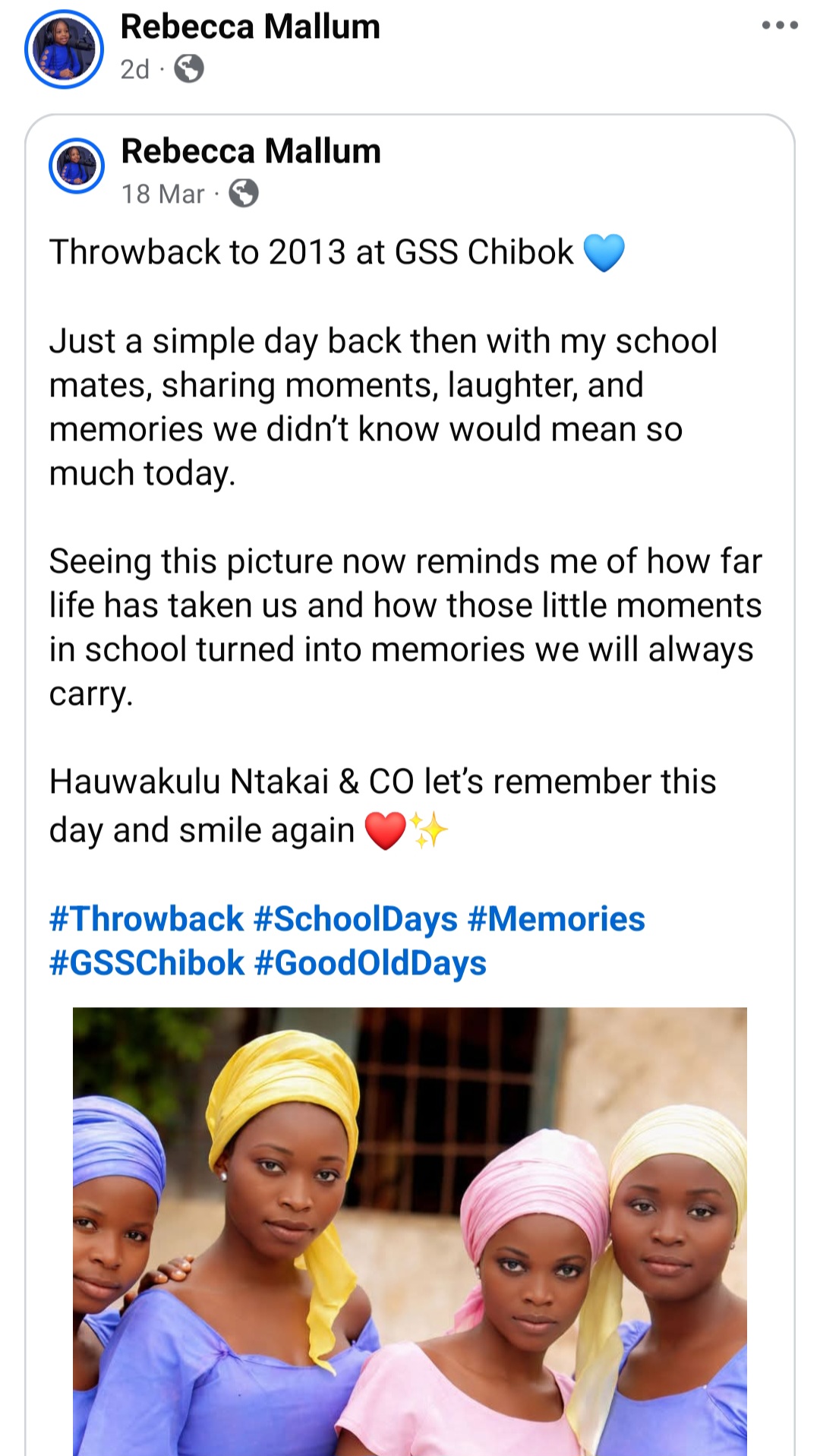
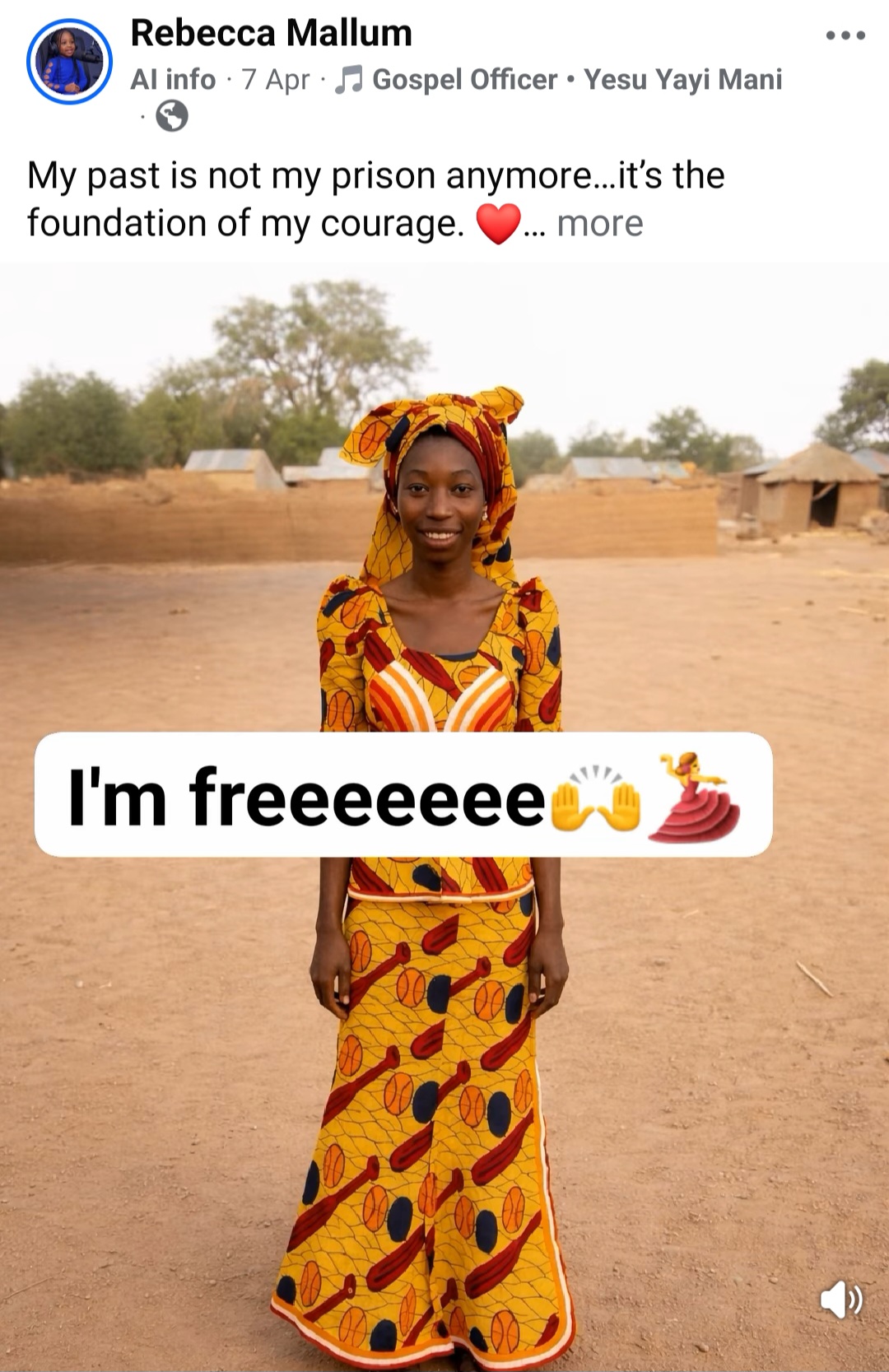
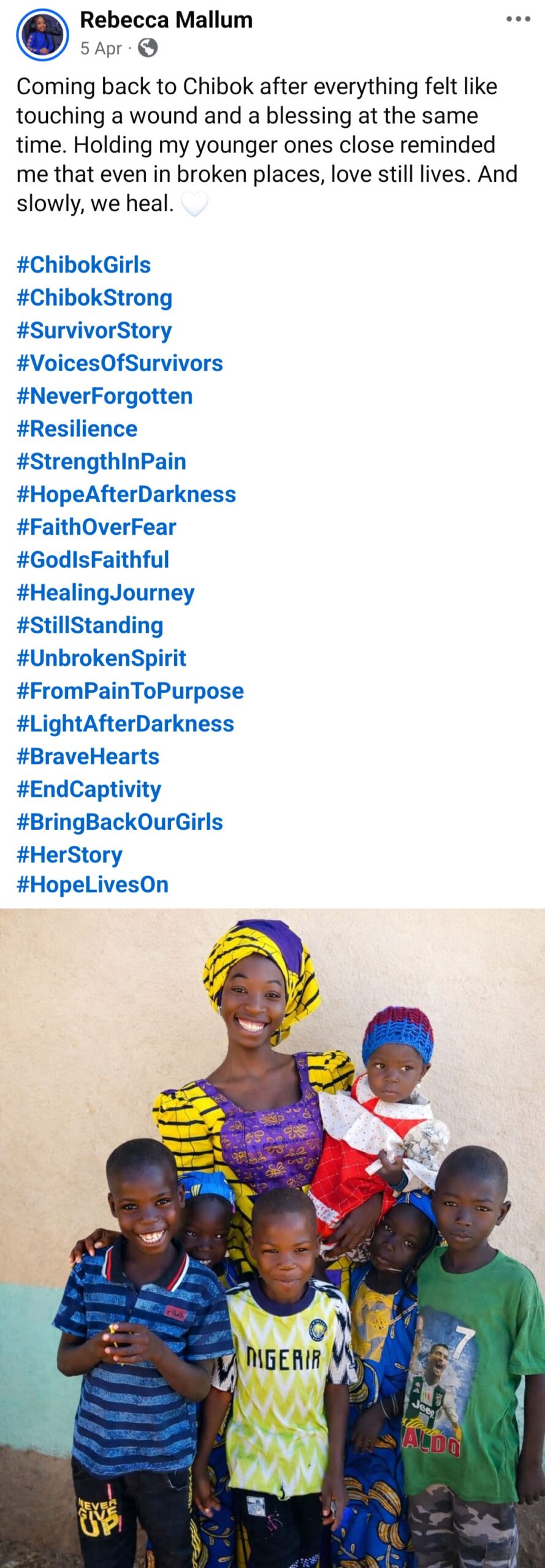
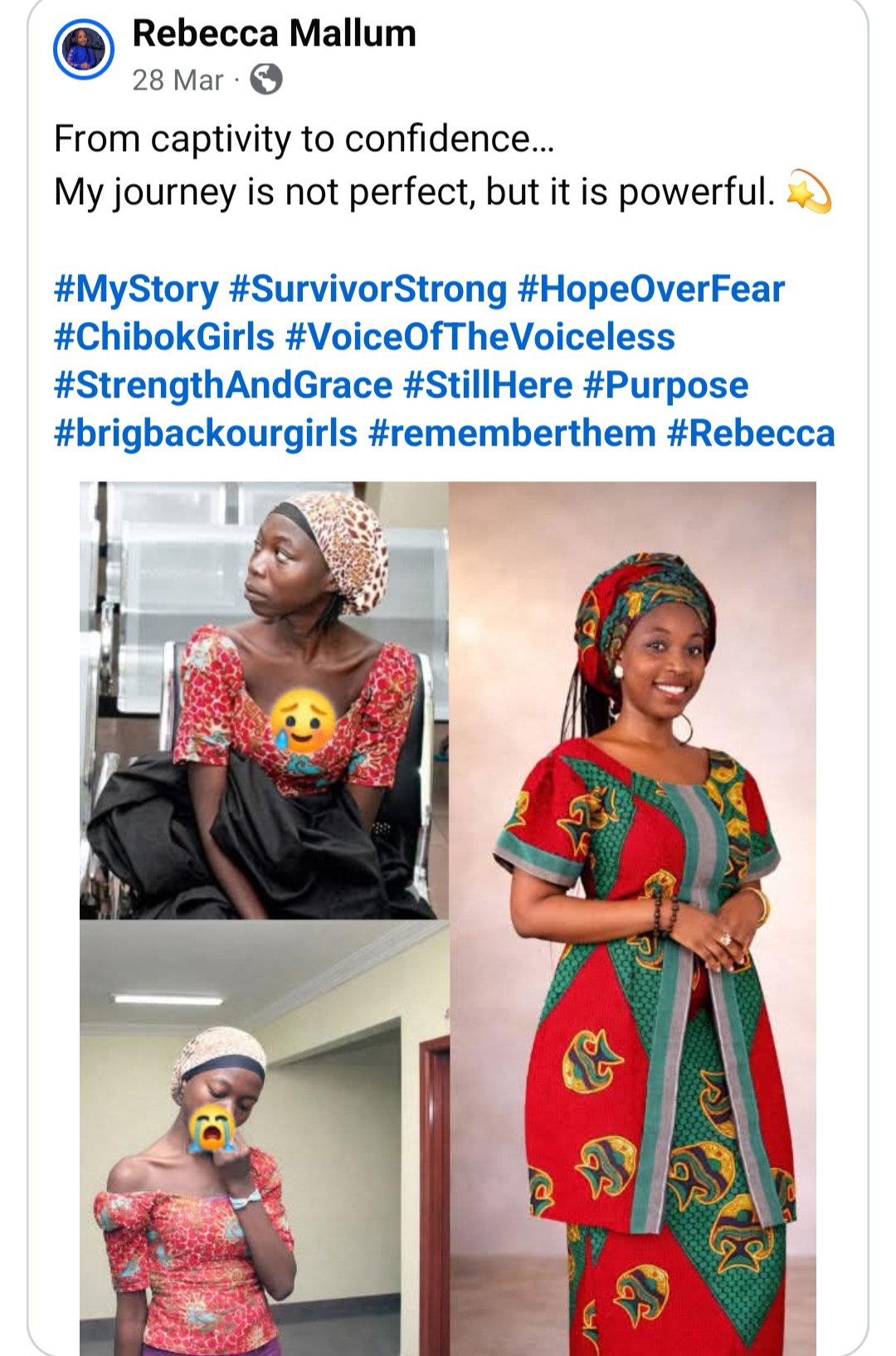
Twelve years. And the weight of that night in April 2014 has not lifted.
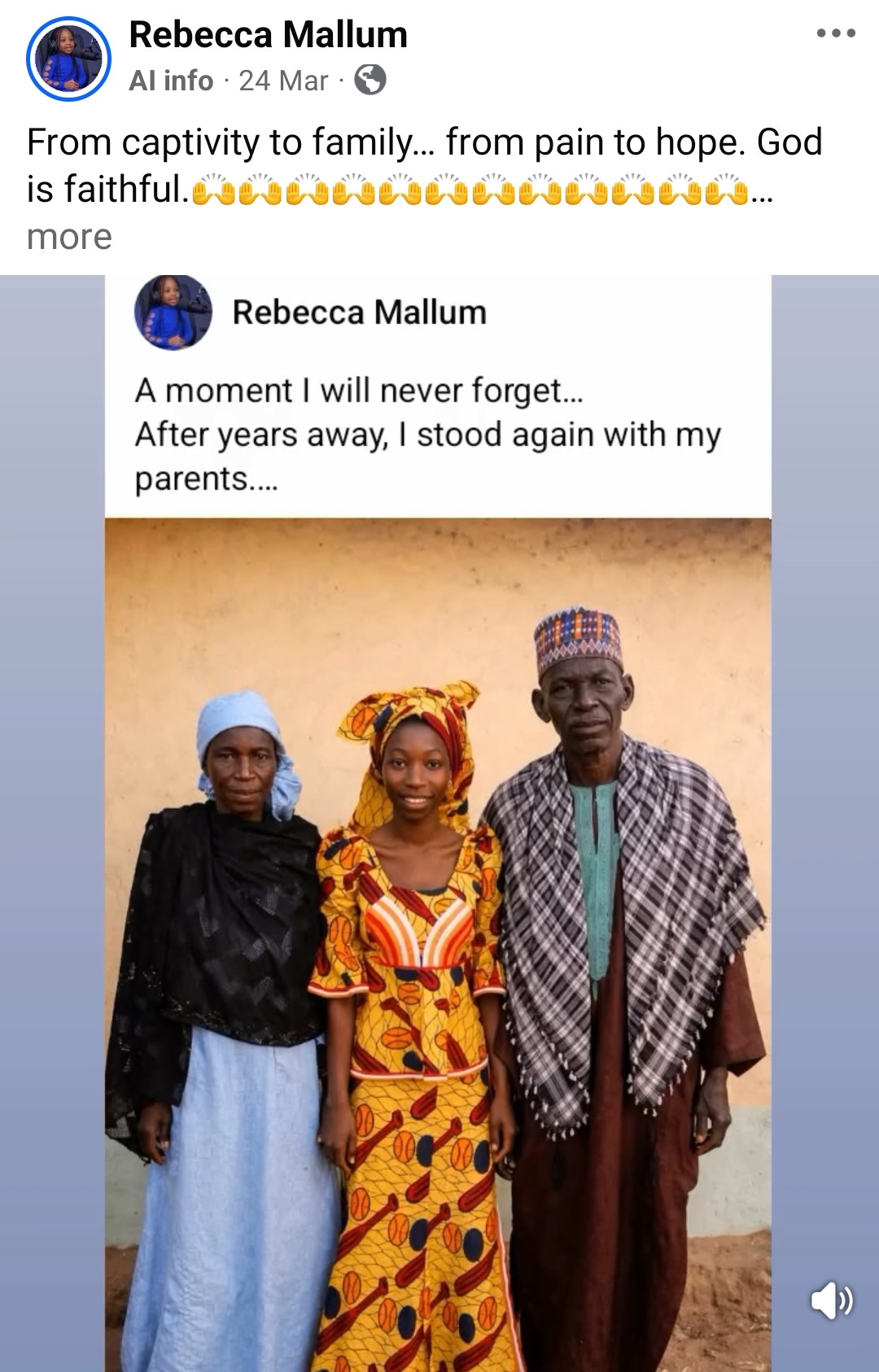
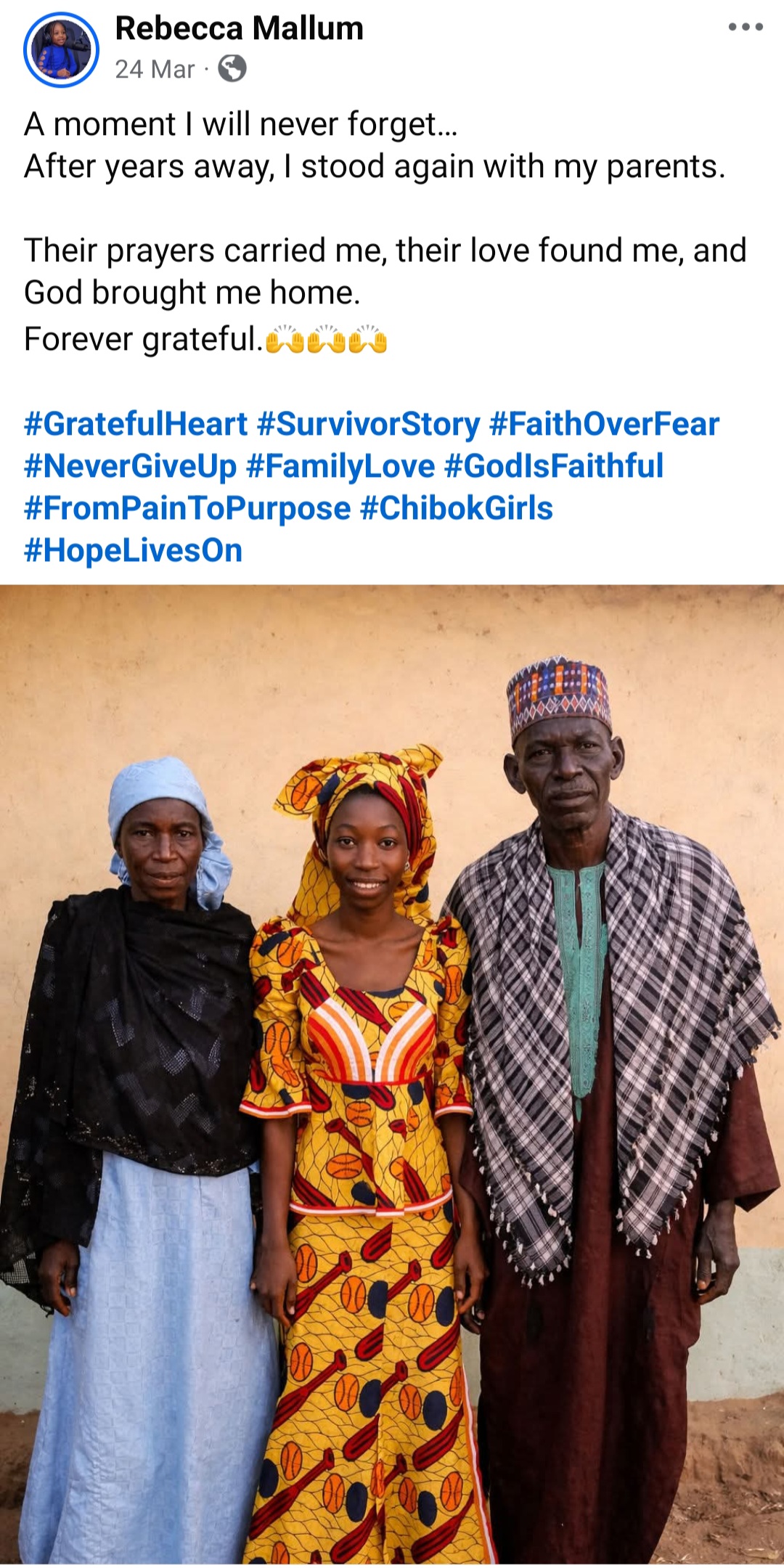
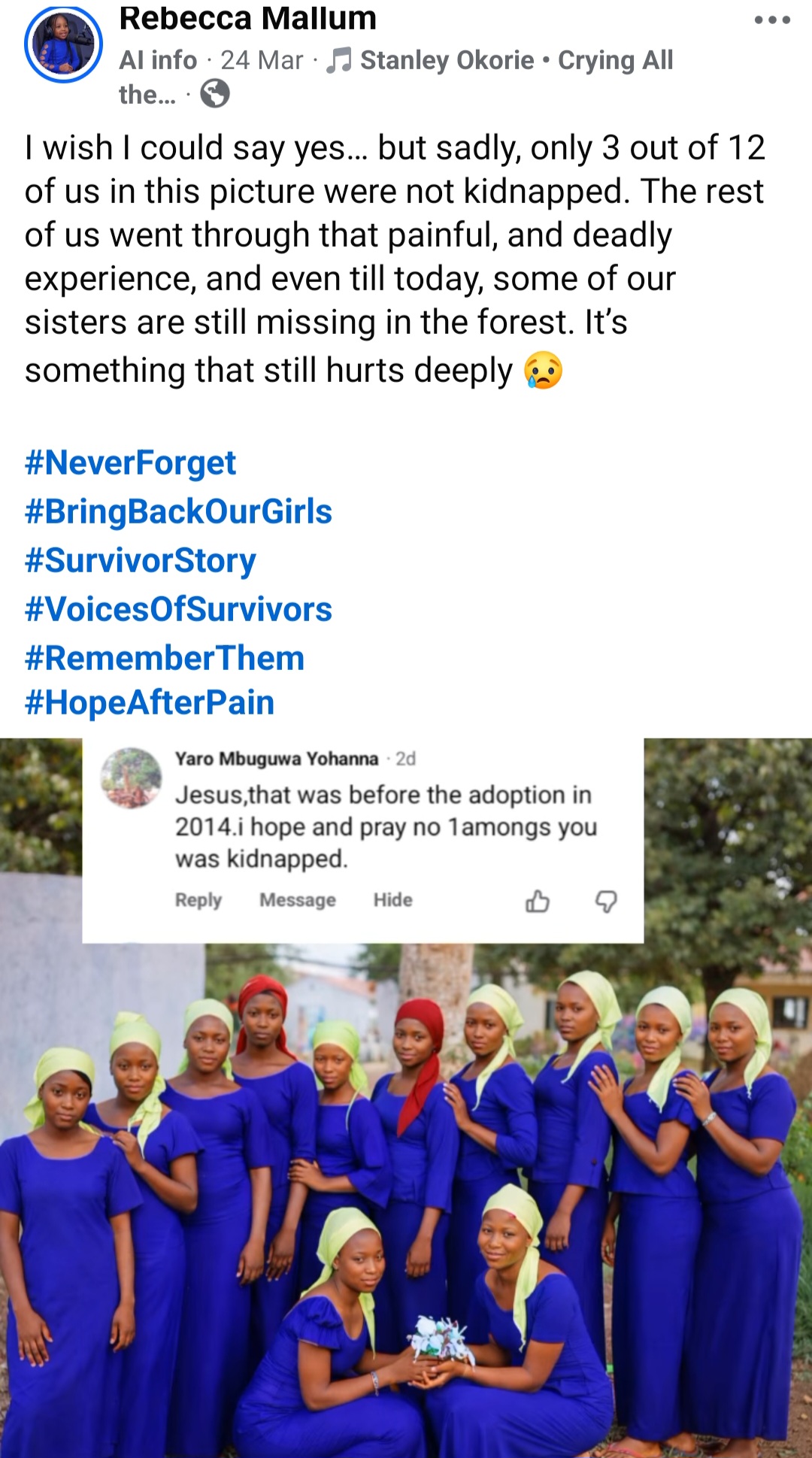
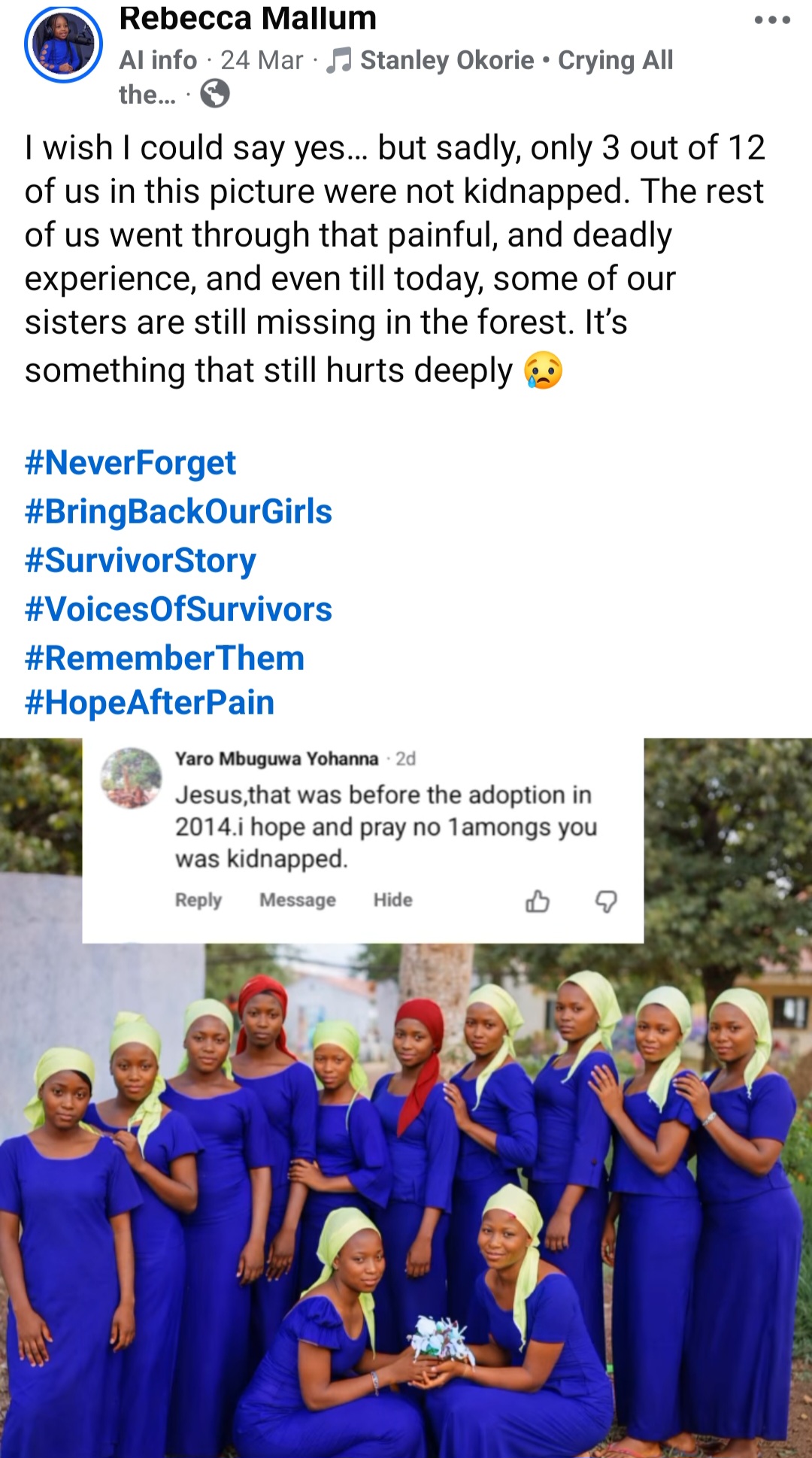
Rebecca Mallum, one of the girls who survived the Chibok school kidnapping that shook Nigeria and drew global attention, marked the 12th anniversary of the abduction on Monday, April 14, with a deeply personal reflection that is difficult to read without feeling something shift inside you.
She wrote from her Facebook page, a space she has dedicated to keeping the memory of kidnapping victims alive and to sharing her own journey as a survivor. And on this particular anniversary, she had a lot to say.
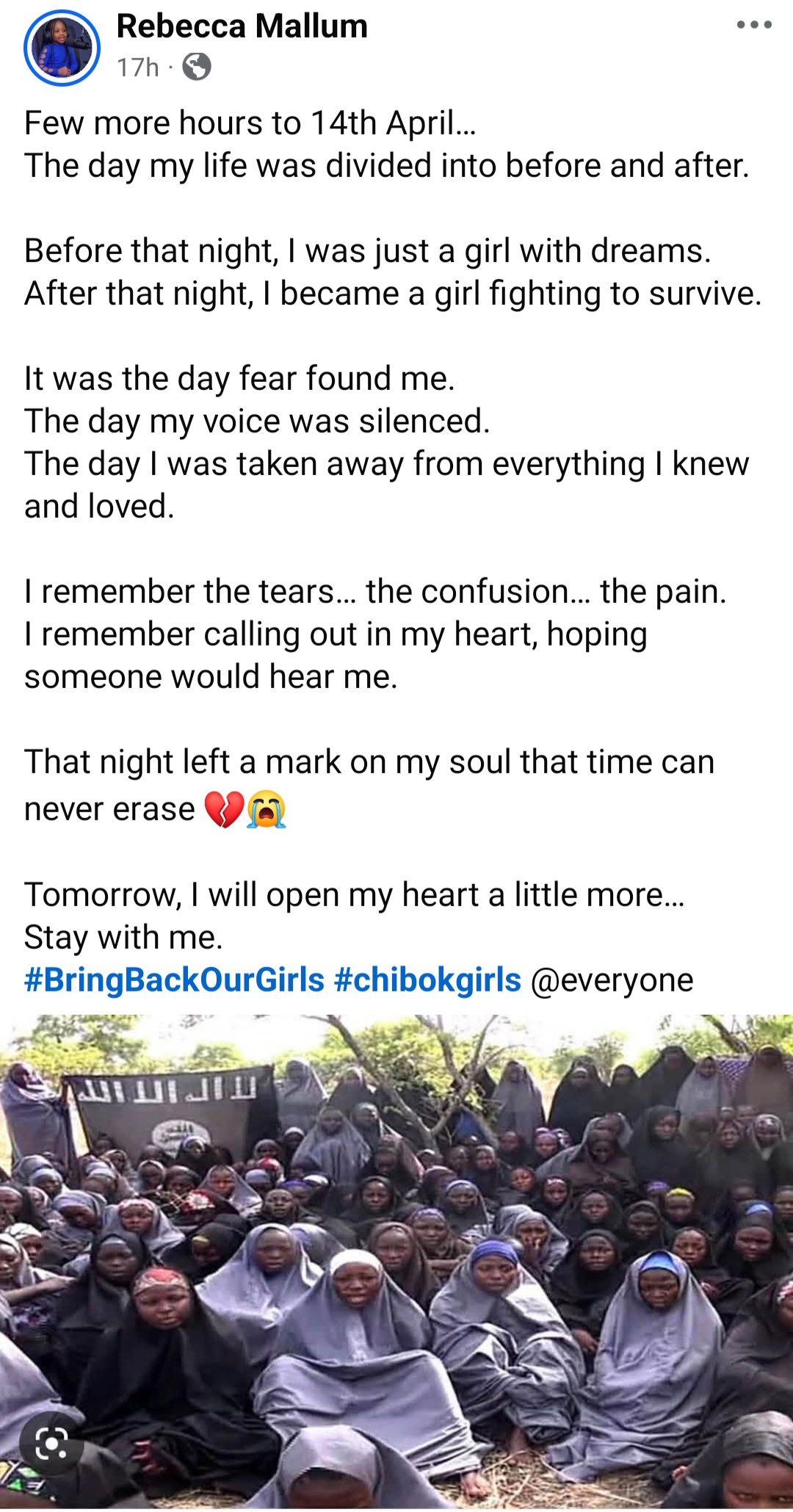
She started the night before, when she posted that the following day was the date that divided her life into two halves. Before that night, she was just a girl with dreams. After it, she became someone fighting to survive. “It was the day fear found me. The day my voice was silenced. The day I was taken away from everything I knew and loved,” she wrote, adding that the mark left on her soul was one that time could never erase.
Then April 14 arrived, and she opened up further.
“Today, 14th April, is a date that will forever remain carved in my heart. It is the day my life changed in a way I never imagined. A day I went from being a young girl with dreams, laughter, and hope, to someone forced into a dark journey I would never have chosen,” she wrote.
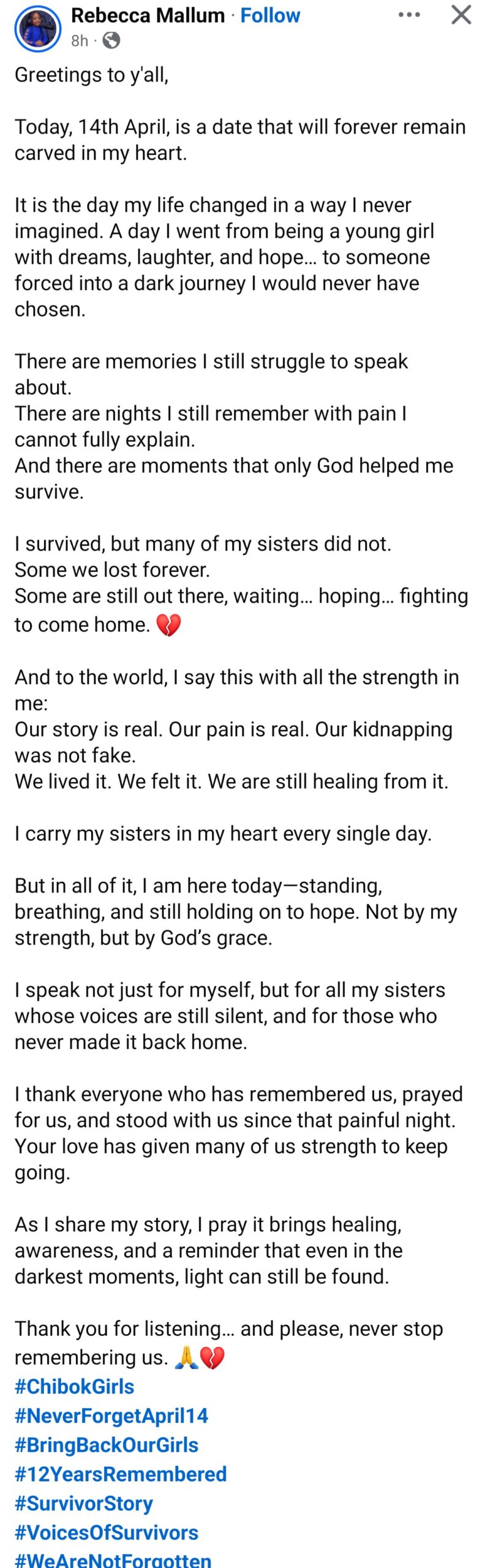
She spoke about memories she still struggles to put into words. About nights that come back to her with a pain she cannot fully explain. About moments she says only God helped her survive. And she spoke about her sisters, the girls who were taken alongside her, some of whom never came back, and some of whom are still out there, somewhere, more than a decade later.
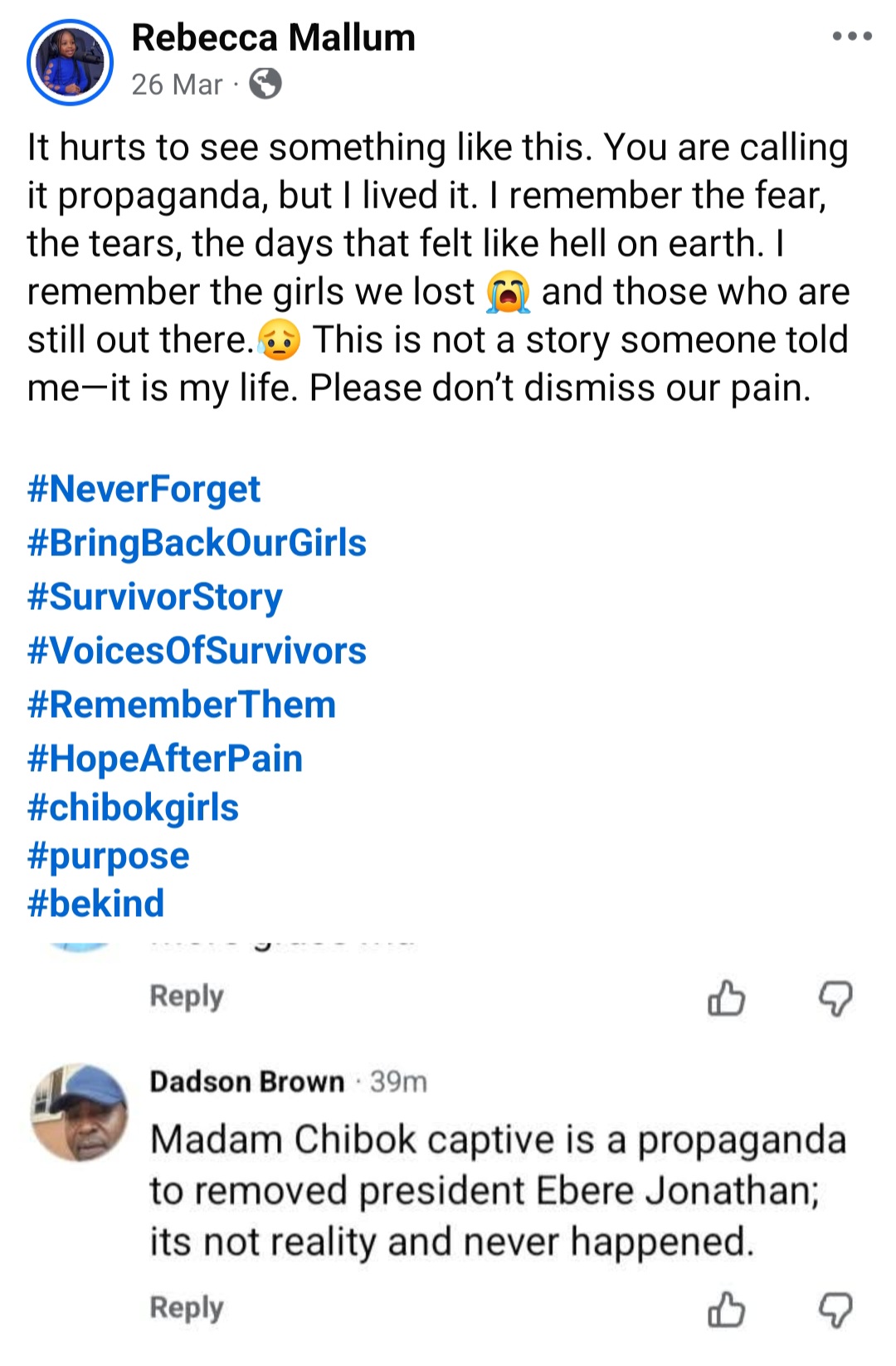
What gave her post an added layer of urgency was her direct response to a narrative that has quietly persisted in certain corners of Nigerian public discourse, the claim that the Chibok kidnapping was staged or exaggerated as a political tool to undermine the Goodluck Jonathan administration at the time. Rebecca did not engage with that theory gently. She shut it down with the full authority of someone who was actually there.
“Our story is real. Our pain is real. Our kidnapping was not fake. We lived it. We felt it. We are still healing from it,” she wrote.
 It is a sentence that should not need to be said twelve years later. The fact that it does says something uncomfortable about how Nigeria processes its own tragedies.
Rebecca ended her post with gratitude for those who have continued to remember, pray and stand with the girls over the years, and with a plea that the world never stop doing so. She said she speaks not just for herself but for the sisters whose voices are still silent, and for those who never made it home at all.
Her Facebook page has become a quiet but consistent archive of memory, a place where the victims of kidnappings and insecurity in Northern Nigeria are not allowed to become statistics or footnotes. On the 12th anniversary of one of the most haunting events in recent Nigerian history, Rebecca Mallum is still showing up for her sisters.
That alone deserves to be remembered.