


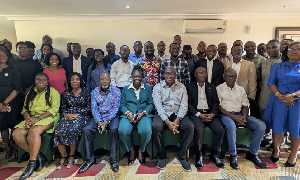
 Nearly 50 people from Ghana and Nigeria have signed up to participate in the capacity building
Ghana is strengthening its readiness to participate in international carbon markets through a master class aimed at building a pool of skilled professionals to develop, register and trade high-quality carbon credits.
The move is to expand national capacity by equipping institutions and individuals with the technical skills required to participate effectively in the market.
Professor Nana Ama Browne Klutse, the Chief Executive of the Environmental Protection Authority, at the opening of the training on Thursday, said the global surge in carbon market activity presented Ghana with a major opportunity to unlock revenue, attract renewable energy technologies and improve livelihoods, especially among vulnerable groups.
The training is the second in the series, in which nearly 50 people from Ghana and Nigeria have signed up to participate.
“The carbon market is trending worldwide, and Ghana has a huge carbon credit potential we can trade for money and for renewable energy technologies that will help the country and its citizens,” Prof Klutse said.
She noted that Ghana has already set up a Carbon Market Office and gained practical experience in transferring its first Authorised Emission Reductions (ITMOs) to Switzerland under Article 6 of the Paris Agreement.
Dr Daniel Tutu Benefoh, the Lead, Ghana Carbon Market Office, would take participants through the fundamentals of compliance and voluntary carbon markets, Ghana’s emerging institutional arrangements, and the technical requirements for generating tradable carbon credits under Article 6 of the Paris Agreement.
He explained that beyond policy frameworks, successful participation in carbon markets depended largely on human capacity, including skills in measurement, reporting and verification (MRV), project design, registry systems, and contract negotiation.
Dr Benefoh said Ghana had progressed in setting up systems to authorise and track carbon transactions, a step expected to attract credible investors and protect national interests in future trades.
He said the training was intended to reduce knowledge gaps that had limited African countries’ participation in global carbon markets, despite the continent’s significant mitigation potential in sectors such as forestry, clean cooking, renewable energy and waste management.
Developing local expertise, he said, would help ensure that carbon projects delivered real emissions reductions while generating revenue for communities and supporting national development priorities.
The ultimate objective is to help build an African carbon market of high integrity.
“This commodity is intangible and thrives on perception and credibility.
“We want Africa to have a market that meets the highest standards,” he said.
Ghana continues to attract attention from other African countries seeking to learn from its carbon market framework, with delegations from Tanzania, Malawi, Uganda and Namibia already engaging the Carbon Market Office.
