


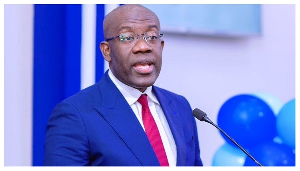
 Kojo Oppong Nkrumah is the MP for Ofoase Ayirebi
The Ranking Member of Parliament’s Economy and Development Committee, Kojo Oppong Nkrumah, has urged the Bank of Ghana (BoG) to strategically deploy part of the excess liquidity it has sterilised — currently estimated at over GH¢60 billion — into venture capital investments and the Ghana Stock Exchange (GSE) to stimulate economic growth and job creation.
According to the Ofoase Ayirebi Member of Parliament, the funds should be channelled to Ghanaians who are already in business in the form of equity financing rather than interest-bearing loans, enabling them to scale up operations, improve productivity, and generate employment without the burden of high borrowing costs.
Oppong Nkrumah further proposed that a portion of the excess liquidity be allocated to the Venture Capital Trust Fund (VCTF) — an initiative established under former President John Agyekum Kufuor — to support youth-led and innovative enterprises with viable business plans.
He emphasised that equity-based financing would allow start-ups and small businesses to actualise their entrepreneurial ambitions while contributing meaningfully to national employment outcomes.
Speaking during an explainer interaction with his social media audience, Oppong Nkrumah disclosed that the Governor of the Bank of Ghana, his deputies, and senior technical officials recently appeared before the Economy and Development Committee of Parliament to provide first-hand economic data and updates.
He noted that the central bank informed the committee that it had mopped up approximately GH¢62 billion from the financial system as part of its liquidity sterilisation measures, aimed at controlling excess money supply and stabilising inflation.
Explaining the rationale behind the policy, Oppong Nkrumah stated that excessive liquidity in the system fuels demand pressures, leading to sustained increases in the prices of goods and services.
As a result, the central bank adopts sterilisation strategies to withdraw surplus funds from circulation in order to moderate inflationary pressures.
He added that the Bank of Ghana confirmed that, from January to date, excess liquidity in the system remains in excess of GH¢60 billion.
It is on this basis, he explained, that the Minority caucus on the committee has formally proposed that the funds should not remain idle at the central bank but rather be prudently invested in productive sectors of the economy, particularly through venture capital and capital market instruments, to drive sustainable growth and employment for Ghanaians.
Watch the video below:
