


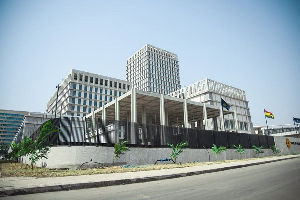
 Bank of Ghana headquarters
The Bank of Ghana (BoG) has dismissed reports of losses from its gold operations, describing them as “speculative,” as the central bank is currently undergoing its annual external audit.
In a statement issued on December 25, 2025, and sighted by GhanaWeb Business, the BoG noted that “any figures reported in relation to losses from gold operations in 2025 remain speculative.”
It pointed out that its audited financial statements, including “all relevant disclosures,” will be published next year [2026] in accordance with statutory requirements.
GoldBod rejects IMF claims of $214m loss in BoG Gold-for-Reserve program
The clarification follows public commentary on the Domestic Gold Purchase Programme (DGPP), which the IMF flagged for potential financial risks during the fifth review of Ghana’s IMF Extended Credit Facility (ECF) programme, completed on December 17, 2025.
While acknowledging the IMF’s caution, the Bank of Ghana said the DGPP has delivered significant macroeconomic benefits, describing it as “a policy tool that has helped shore up Ghana’s international reserves, supported currency stability, and enabled access to large volumes of foreign exchange without incurring new debt.”
The BoG, in the statement, highlighted the role of the Ghana Gold Board (GoldBod) as an aggregator, noting that its operations have been “important in channelling gold-based inflows from the small-scale mining sector into the official market,” ensuring the programme remains “anchored in public policy objectives.”
The central bank also linked the DGPP to improvements in Ghana’s external position. It mentioned that tentative Bank of Ghana data suggest international reserves could exceed US$13 billion by the end of 2025.
According to the BoG, the IMF’s latest review recognised “the significant macroeconomic progress made” under the ECF program, despite delays in some structural reforms due to their complexity.
To address fiscal costs associated with the gold program, the BoG disclosed that its board has approved reforms aimed at improving pricing and operational efficiency.
It added that these reforms, scheduled to begin in January 2026, will focus on “reducing intermediation fees, improving cost-efficiency, and achieving competitive, yet economically sound buying prices,” supported by allocations in the 2026 national budget.
The Bank of Ghana reiterated that conclusions on the financial performance of its gold operations should await the completion of the external audit, emphasising that “claims of losses at this stage are premature.”
See the full statement below:
MA
